Heathrow Airport (LHR) Arrival Strategy: The Entry to England Blueprint
Vacation doesn't start at touchdown. It starts when you navigate the multi-terminal labyrinth of Heathrow (LHR) without losing your patience or falling for a "Terminal Tax" on your transit.
At Decided Travel Studio, we’ve mapped the literal path from getting off the plane to getting into your airport transportation. Whether you are heading to the Brighton coast or the London city center, this is the proven strategy for a friction-free entry into England.
The Decided Download
The Arrival Point: Heathrow Airport (LHR), London, Brighton.
The 2026 Change: Mandatory UK ETA (£16–£20) linked to biometric passports.
The Pro Move: Use the e-Gates with a bare passport (no covers) to avoid the 30-minute "Human Queue."
The Transit Winner: The Elizabeth Line for London (£13.30) or National Express for a direct, luggage-friendly shot to Brighton.
Jetbridge Marathon
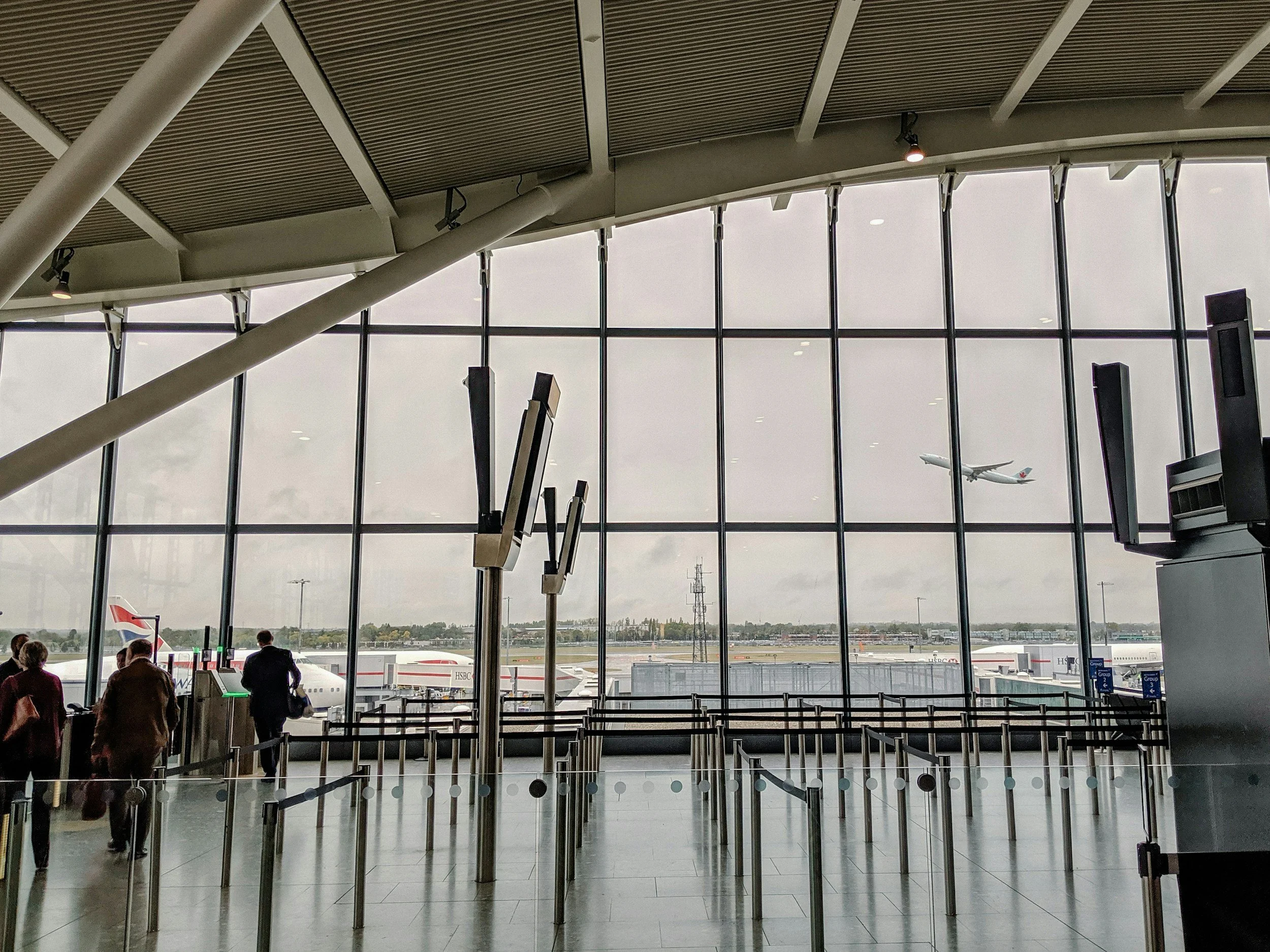
Heathrow is a sprawling entity. Depending on your airline, you will land at one of the four active terminals. Knowing your terminal is the first step in engineering your exit:
Terminal 2 (The Queen's Terminal): Home to United Airlines, JetBlue, and the Star Alliance network (Lufthansa, Air Canada, Singapore Airlines). Aer Lingus also operates here for Ireland/UK domestic connections.
Terminal 3: The hub for American Airlines, Delta Air Lines, Virgin Atlantic, and Emirates.
Terminal 4: Serves non-aligned international carriers (airlines not in a major alliance, like Etihad Airways, El Al, or Gulf Air) and SkyTeam members (Air France, KLM).
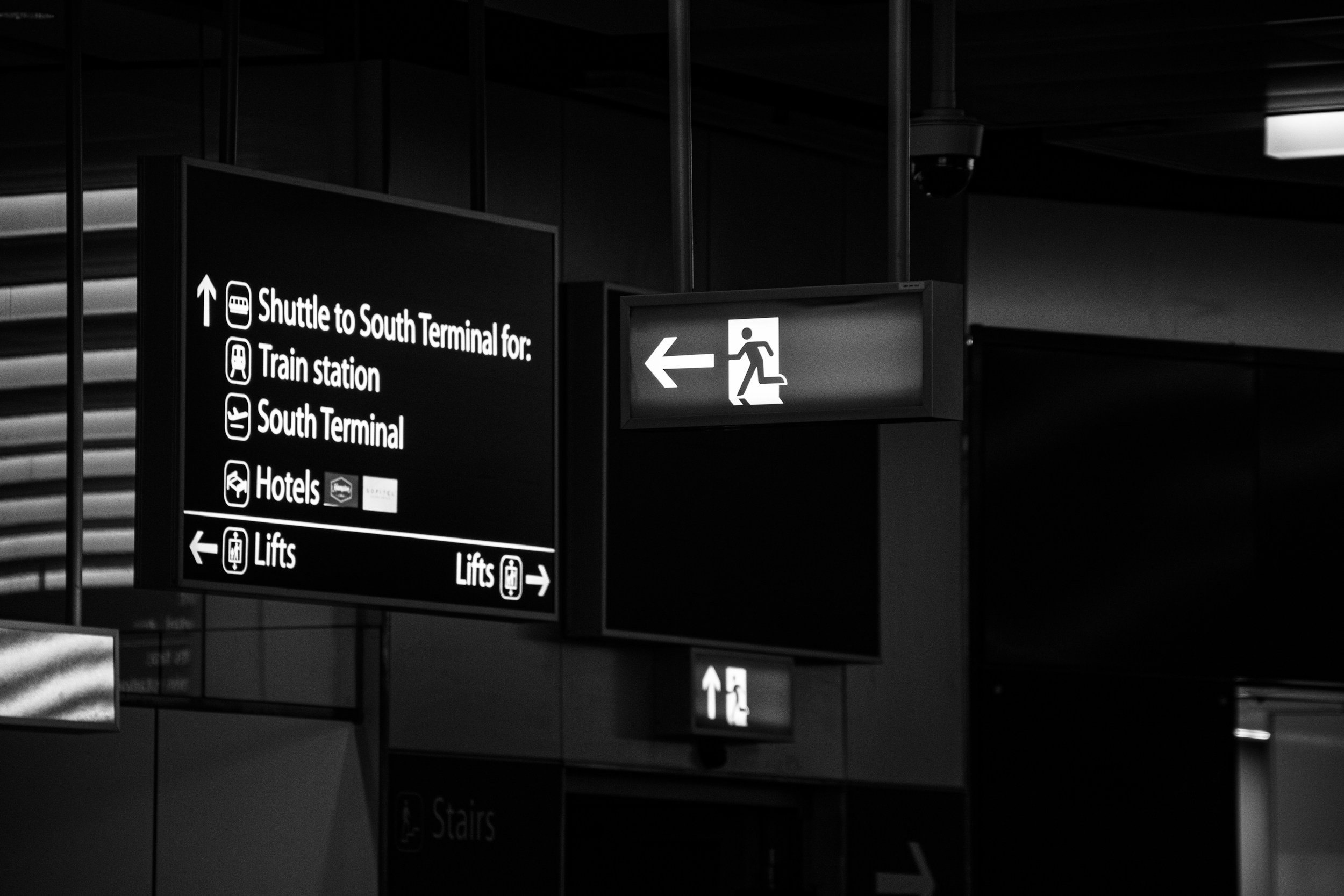
Terminal 5: The exclusive domain of British Airways. When landing at Terminal 5 at a "B" or "C" gate, do not attempt the pedestrian walkway. Follow the signs for the Transit Shuttle. It’s a 45-second automated ride that saves you a 1,000-meter hike with carry-on luggage.
For those unused to massive European hubs, be prepared: you won't always walk directly off the plane and onto a jetbridge. On many long-haul international flights, passengers disembark away from the terminal, board a coach (bus), and are driven to the terminal building to begin the walk toward customs.
Decided Insight: If you are flying British Airways from the US, do not assume you are landing at Terminal 5. While T5 is the "home" base, BA frequently shifts long-haul arrivals to Terminal 3. Watch the flight map as you descend; if you see the "Central Area" terminals instead of the standalone T5 building, you're in for a Terminal 3 arrival, which actually has much shorter walks to customs, baggage claim, and transportation.
Border Control: Immigration & The ETA
The UK border has shifted to a "Digital-First" system. Your experience here depends entirely on your passport.
International Arrivals (US/Canada/Australia/EU): As of early 2026, you must have a valid Electronic Travel Authorisation (ETA) linked to your passport. It costs £16 (increasing to £20 in April 2026) and is mandatory for boarding your flight.
The e-Gates: If you have a biometric passport, head straight for the e-Gates. They are significantly faster than the manual desks.
Note: A biometric passport (or e-passport) has a small gold camera-like icon on the bottom of the front cover. It contains an embedded chip with your digital signature and photo that the gate's scanner reads automatically.
Domestic Arrivals (UK/Ireland): You will bypass immigration entirely. Follow the signs for "UK Arrivals" which lead directly to the baggage carousels.
Decided Insight: Strip your passport of its leather or plastic cover before you reach the e-Gate scanner. The cameras are notoriously finicky; if the cover causes a glare, the gate will fail, and you’ll be sent to the back of the manual "Human Agent" queue, adding 30+ minutes to your arrival.
Baggage Claim & The "Ground Truth"
Once through immigration, follow the screens to your designated carousel. After picking up your luggage, you will pass one more customs walkthrough before exiting to the Arrivals Halls where you can start the journey to your transportation of choice. The last customs walkthrough couldn’t be easier; there is a doorway for “nothing to declare” and one for “needing to declare.” Choose the appropriate one and then you will be on your way.
Pay the UK Way
Brighton and London, for the most part, are cashless cities, and so is most of the UK. From the Heathrow Express to the smallest coffee stall in Brighton, you only need a contactless card or Apple/Google Pay.
Tap to pay with phone: If you are traveling from the US, make sure you set up “tap to pay” on your phone before you leave for the airport in your home city. Need help setting it up? Learn more about setting up Apple Pay on iPhones and Google Pay on Androids. (internal note - add links to those help center articles)
Avoid the Kiosks and ATMs: Do not use the Travelex or "standalone" blue and yellow ATMs in the arrivals hall. They often hide a 15% conversion markup.
SIM Card Move: If you don't have an international data plan, look for the EE or Three vending machines in the baggage hall. It is cheaper to grab a travel SIM here than to pay roaming fees for a single day. If your phone has e-SIM capabilities, you can use that which is even cheaper. The best options for that are Airalo or EE Travel eSIM. (EE is the UK’s fastest network. It’s native 5G and significantly more reliable than third-party roaming.)
Transport Strategy: Getting to your destination
Brighton
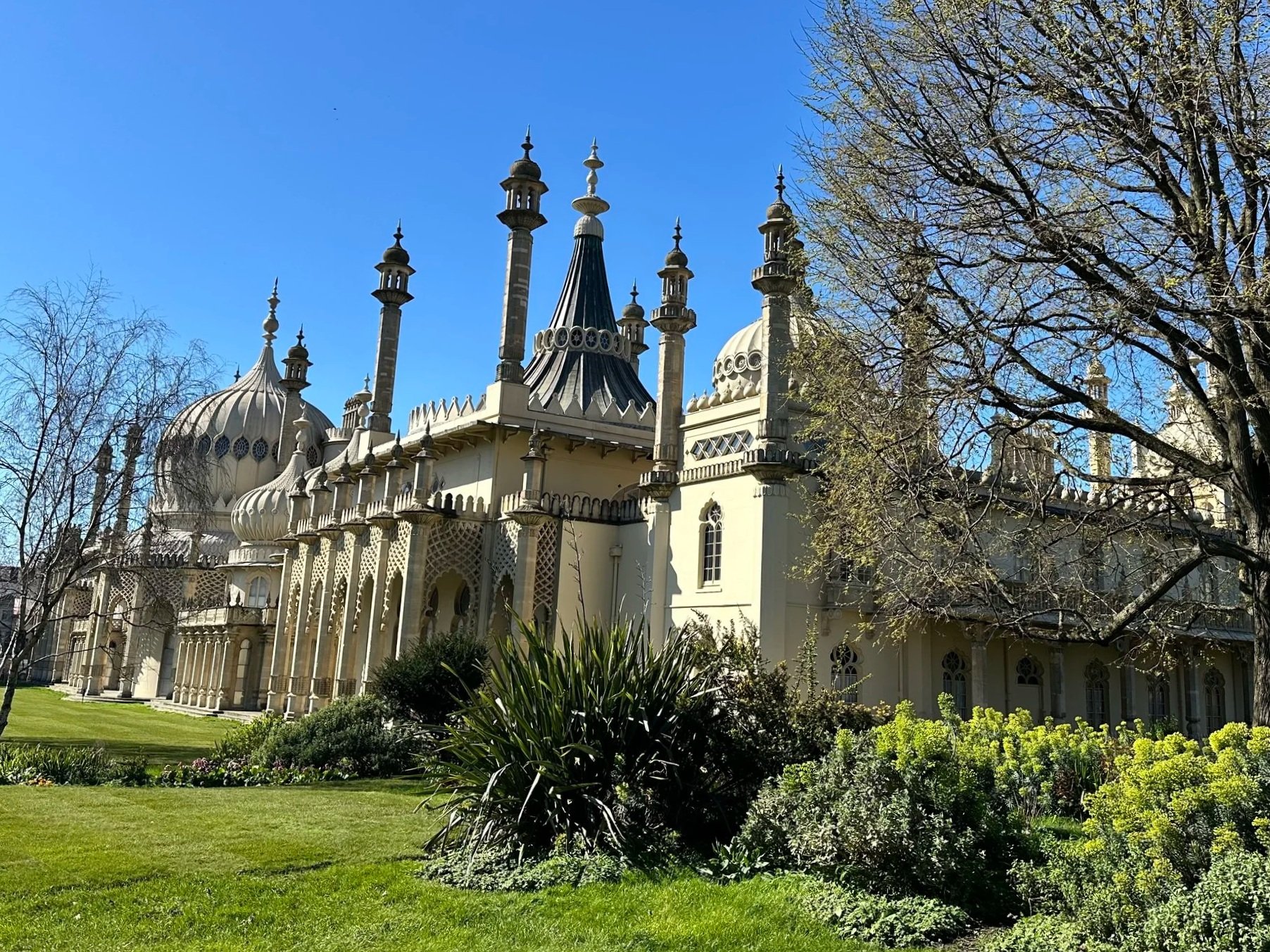
Since Brighton is one of our flagship UK destinations, we prioritize the "Coast Path." You have three primary options:
The National Express (Low prices, long trip): This is the only direct route.
Directions:
Terminals 2 & 3: Follow the signs for the Central Bus Station. You will take a lift down to an underground pedestrian walkway. It is a 5-10 minute walk.
Terminal 5: The coach stops are located directly outside the arrivals level on the ground floor. Look for the "Local Buses/Coaches" signs at the terminal exit.
Time: ~2 hours.
Cost: £12–£30.
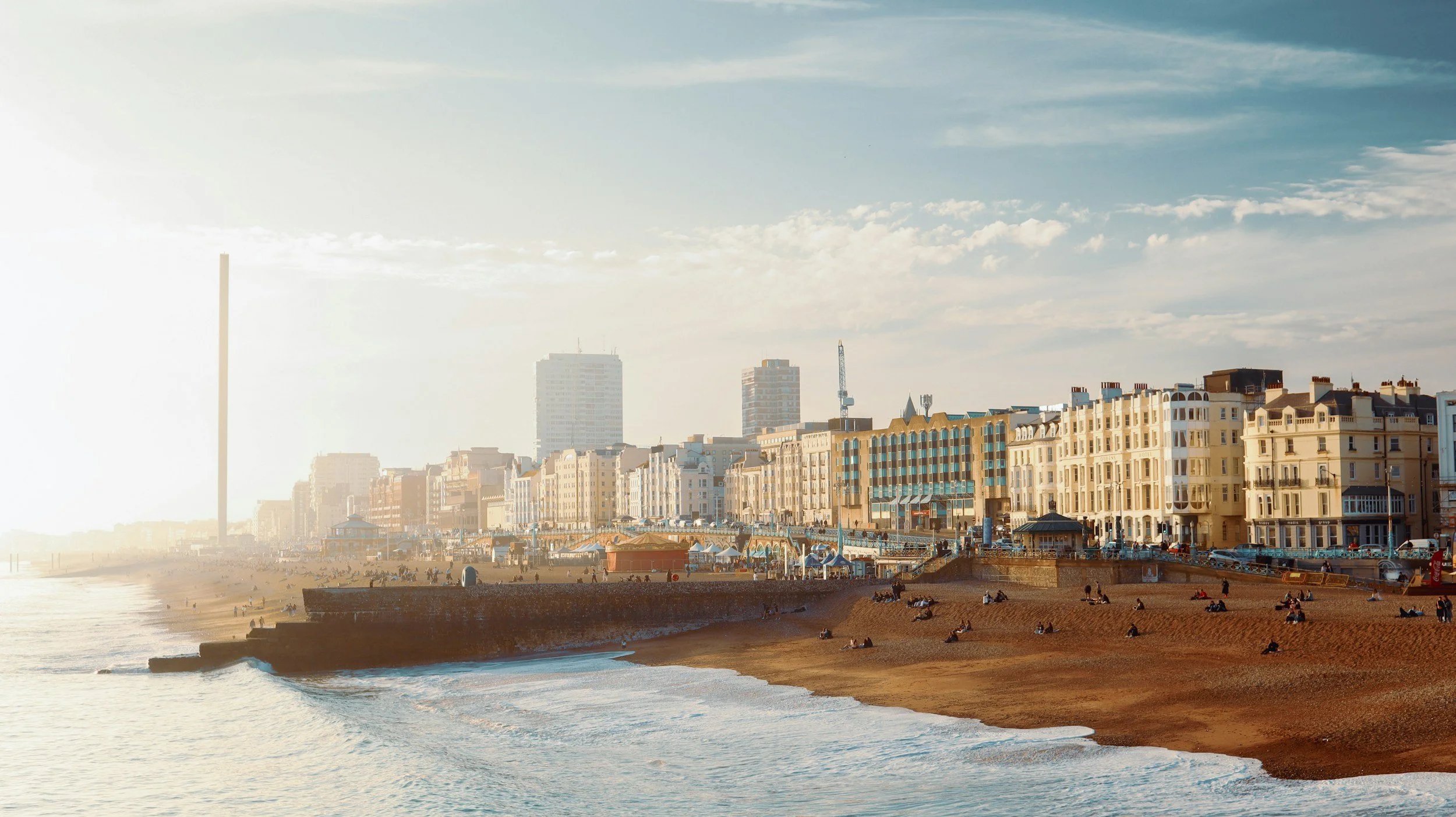
Benefit: No dragging luggage through London train stations. It drops you at the city centre, right by the Brighton Pier.
The Train (High prices, longer trip): Take The Elizabeth Line to Farringdon, then switch to a Thameslink train toward Brighton.
Directions:
All Terminals: Follow the purple "Train" or "Elizabeth Line" signs. These take you to the underground rail stations located within the terminal buildings.
The Farringdon Transfer: When you arrive at Farringdon on The Elizabeth Line, take the escalators up to the main concourse. Follow the signs for "Thameslink Southbound" (Platform 4). It is a well-marked, internal transfer.
Time: ~2 hours 15 mins.
Cost: ~£40–£60.
Benefit: More frequent than The National Express, but requires a high-stress transfer with bags at Farringdon.
Taxi/Private Hire Premium Decision: A pre-booked minicab (like 247Cars or Brighton Taxis), Uber, or Bolt. Never take a Black Cab from the Heathrow rank to Brighton; the metered fare will likely exceed £250.
Directions:
Terminal 2: Exit Arrivals and follow signs for the Short Stay Car Park 2. Take the lift to Level 4. Look for Row H—this is the designated Private Hire/Uber pickup zone.
Terminal 3: Exit Arrivals and follow signs for the Short Stay Car Park 3. You will find the pickup area on Level 3. Follow the "Private Hire" signs to Row A.
Terminal 4: Follow the signs for the Short Stay Car Park. The Private Hire/Uber pickup point is located on Level 1.
Terminal 5: Exit Arrivals and follow signs for the Short Stay Car Park 5. Take the lift to Level 4. The designated pickup point for apps and private hire is Row R.
Taxi Ranks: Follow the "Taxi" signs to the designated queue outside each terminal on the ground floor.
Time: Under 1.5 hours with good traffic; 2+ hours with bad traffic.
Cost: Roughly £100–£140.
Benefit: Door-to-door car service that typically takes the shortest amount of time.
London
If your first stop is the capital, the method into town varies by speed and budget.
The Elizabeth Line (Newest Line):
Directions: Follow the purple "Elizabeth Line" signs in any terminal. Use a contactless card or phone to tap the yellow readers at the ticket gates.
Time: 35–45 minutes.
Cost: ~£13.30.
Benefit: Faster than The Tube, half the price of The Heathrow Express. It goes directly to Tottenham Court Road and the City.
The Heathrow Express (Quickest Line):
Directions: Follow the dark blue "Heathrow Express" signs. They share the same stations as The Elizabeth Line but depart from different platforms.
Time: 15 minutes to Paddington.
Cost: £25 (though cheaper if booked months in advance).
Benefit: The fastest way into town, but only worth it if your hotel is in West London or near The Paddington Station.
The Piccadilly Line (Longest Line):
Directions: Follow the blue "Underground" signs. This is The Tube.
Time: 60+ minutes.
Cost: ~£5.60.
Benefit: The cheapest option. However, it is often cramped, lacks air conditioning, and involves many stops before reaching Central London.
Taxi/Uber/Private Hire:
Directions:
Terminal 2: Exit Arrivals and follow signs for the Short Stay Car Park 2. Take the lift to Level 4, Row H for app pickups. For Black Cabs, follow the "Taxi" signs on the ground floor.
Terminal 3: Exit Arrivals and follow signs for the Short Stay Car Park 3, Level 3, Row A. For Black Cabs, follow the "Taxi" signs on the ground floor.
Terminal 4: Follow the signs for the Short Stay Car Park, Level 1. For Black Cabs, follow the "Taxi" signs on the ground floor.
Terminal 5: Exit Arrivals and follow signs for the Short Stay Car Park 5, Level 4, Row R. For Black Cabs, follow the "Taxi" signs on the ground floor.
Time: 45–90 minutes depending on London traffic.
Cost: £60–£100.
Benefit: Best if you have excessive luggage or a group of 3-4 people.
Studio Arrival Checklist
ETA Check: Ensure your Electronic Travel Authorisation is approved and digitally linked to your passport at least 72 hours before departure.
Flight Map: Monitor your descent; if you land at Terminal 3 on British Airways, you'll have a faster exit to the trains.
Passport Prep: Remove any decorative covers before reaching the e-Gates to avoid a glare-induced "Gate Fail."
Transit Shuttle: If at Terminal 5 (B or C gates), ignore the walkways and take the automated transit shuttle to reach the main terminal.
Tech Prep: Ensure your phone is set to "Express Mode" for transit payments so you don't have to authenticate at every gate.
Hydration Move: Hang onto a reusable bottle from the plane and fill it up at a water fountain. Or hit the Boots or Marks & Spencer (M&S) stores in Arrivals for water; it’s significantly cheaper than the vending machines.
Heathrow Airport FREQUENTLY ASKED QUESTIONS
-
Yes. All international arrivals (US/Canada/Australia/EU) must have a valid Electronic Travel Authorisation (ETA) digitally linked to their passport before boarding. It costs £16 (rising to £20 in April 2026).
-
The Heathrow Express is the quickest, reaching Paddington in 15 minutes. However, for strategic value, the Elizabeth Line takes 35-45 minutes for half the price (£13.30) and serves more central stations like Tottenham Court Road.
-
The National Express coach is the only direct route. It takes roughly 2 hours and drops you at the Brighton Pier, sparing you the stress of dragging luggage through London train transfers.



Brighton’s seagulls don’t ask. They take. If you're coming to Brighton, this is your warning.
You can plan the perfect beach day.
You can pick the right spot.
You can finally relax.
None of that matters. Because the seagulls are watching. “Hang Onto Your Chips” isn’t a joke. It’s survival advice. This is for people who’ve been here before. Or people who are about to learn the hard way. Just a quiet nod to the chaos. Wear it before they take your lunch.
Studio Note on Currency: Decided Travel Studio is proudly based in the UK, and serves customers all around the world. While prices are shown in GBP (£), your local bank or credit card will handle the conversion to USD/EUR (or your local currency) automatically at checkout. Products ship from our local distribution partners closest to you for faster delivery (US/UK/EU).
Premium fit. Clean design. No fluff.
Bella + Canvas 3001 (retail fit)
Soft, lightweight feel
Designed for Brighton
Conversation starter (you’ll see)
Age restrictions: For adults
EU Warranty: 2 years
In compliance with the General Product Safety Regulation (GPSR), Decided Travel Studio and SINDEN VENTURES LIMITED ensure that all consumer products offered are safe and meet EU standards. For any product safety related inquiries or concerns, please contact our EU representative at gpsr@sindenventures.com. You can also write to us at 32 Sillwood Street, Brighton, UK, BN12PS or Markou Evgenikou 11, Mesa Geitonia, 4002, Limassol, Cyprus.